
Manufacturing diffraction gratings and advanced optical components in glass places extreme demands on precision, edge quality, and repeatability. For Wasatch Photonics, a global leader in spectroscopy and diffractive optics, even the smallest deviation can impact system performance. When the need for a more controlled, non-thermal and non-conductive cutting process became evident, the company turned to Finepart.
Wasatch Photonics designs and manufactures high-performance diffraction gratings and optical solutions used across life science, environmental monitoring, industrial process control, and research applications. In these fields, material integrity, clean edges, and predictable quality are non-negotiable.
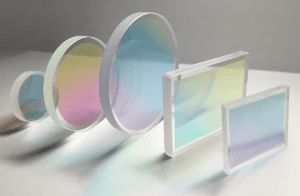
The Challenge: Precision Glass Cutting Without Thermal Impact
Conventional cutting technologies often introduce thermal stress, micro-cracking, or inconsistent edge quality—challenges that become particularly critical when working with optical glass. As tolerances tightened and component geometries evolved, these limitations increasingly constrained production.
“We work with components where even minor imperfections can affect optical performance. We needed a cutting process that provided absolute control, without compromising the optical properties of the glass.” — Clayton Halper, Manufacturing Engineer – Holography at Wasatch Photonics
From a process-physics perspective, the requirements were clear. “Optical glass is highly sensitive to both thermal and mechanical load,” explains Christian Öjmertz, CTO of Finepart. “Even limited heat input or localized stress can introduce micro-cracks, residual stress, or subsurface damage that directly affects optical performance.”
The Decision: A 3-Axis Finecut System
After evaluating several cutting technologies, Wasatch Photonics selected a 3-axis Finecut system from Finepart Sweden AB. The decision was driven by the cold-cutting process, micro-level accuracy, and Finecut’s ability to machine brittle, non-conductive materials without thermal influence.
“Optical glass is an unforgiving, non-conductive material, and our tolerances leave no room for compromise. Finecut offered the level of precision, stability, and process control we were looking for.” — Joel Johnson, General Manager at Wasatch Photonics
Finecut’s micro abrasive waterjet technology removes material through controlled erosion rather than heat or electrical conductivity. “That makes the process particularly well suited for non-conductive materials such as glass,” Öjmertz adds. “We are not dependent on electrical properties, which allows us to maintain consistent cutting behavior across a wide range of optical materials.”
The Result: Immediate Validation
The effect of the new process was evident from the very first cut.
“Very good! The best we ever produced! Perfect!”
“The first Finecut result stood out immediately—clean edges, excellent consistency, and no visible thermal impact on the glass,” says Halper.
“When the process window is well defined and stable, results like this are repeatable—not exceptional,” notes Krister Andersson, Technician at Finepart and responsible for the installation and commissioning at Wasatch. “That repeatability is what enables optical manufacturing to scale with confidence.”
From First Cut to Long-Term Capability
Installation and commissioning were completed efficiently, and operators were quickly able to integrate the system into daily production. With Finecut now an integral part of the manufacturing process, Wasatch Photonics sees new opportunities to further refine its optical components and expand its manufacturing capabilities.
“Finecut gives us a level of control and repeatability that fundamentally improves our manufacturing process. It strengthens our ability to meet both current and future requirements from our customers.” — Joel Johnson
“Our focus is not only on accuracy, but on predictable behavior over time,” Öjmertz emphasizes. “For precision optics, consistency from part to part and batch to batch is as critical as absolute precision.”
A Shared Commitment to Precision and Innovation
The collaboration between Wasatch Photonics and Finepart reflects a shared ambition to push the boundaries of precision manufacturing for advanced optics.
“Wasatch Photonics operates at the highest level of optical performance. Their requirements align perfectly with what the Finecut is designed to deliver—non-thermal processing, suitability for non-conductive materials, exceptional edge quality, and robust process control.” — Lars Darvall, CEO of Finepart Sweden AB
As photonics and spectroscopy applications continue to evolve, reliable micro-machining without thermal influence becomes increasingly critical. With Finecut technology in place, Wasatch Photonics has strengthened its production platform—ready to meet the next generation of demands in diffractive optics and precision photonics.
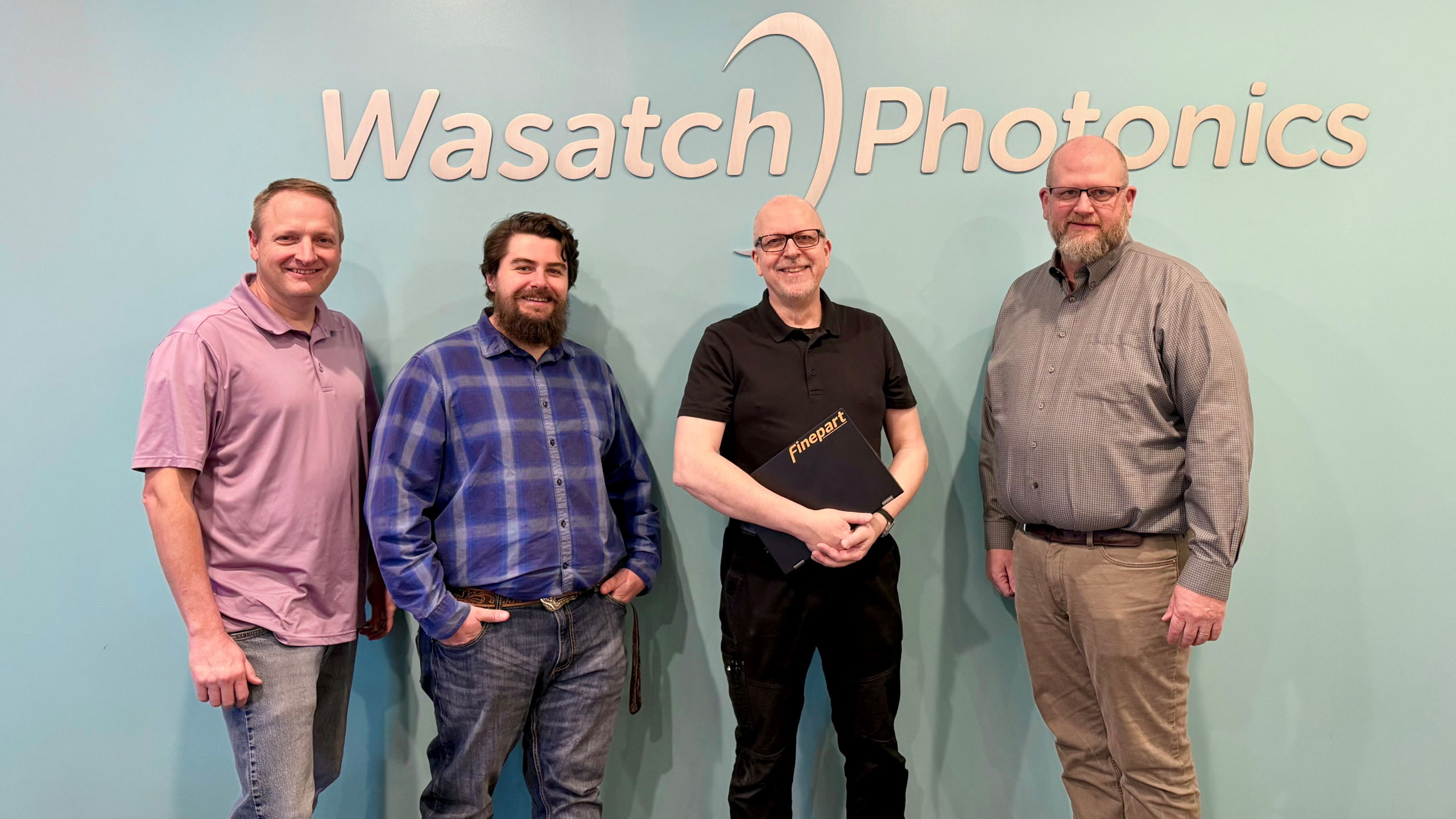
Operational Impact: Speed, Accuracy and Process Automation
The impact on Wasatch Photonics’ internal manufacturing workflow became evident quickly after the system was integrated into production.
“The Finecut system has helped us shorten lead times and improve on-time delivery. As part of our validation process, we conducted a head-to-head comparison with our previous cutting method. The Finecut completed the same work approximately 2.5 times faster.” — Joel Johnson
Beyond speed improvements, the system has also improved dimensional accuracy and overall product quality.
“Our parts are now consistently centered and much cleaner. Previously we had to perform manual rework to meet customer specifications. That is no longer necessary. The results are more professional, with clean cuts and consistent alignment every time.” — Joel Johnson
Process automation has also simplified preparation and setup. Working closely with the Wasatch team, Finepart helped develop a dedicated software solution that automatically centers and aligns the company’s unique product geometry.
“The setup time and manual steps we previously used to ensure proper alignment are essentially gone. The process is now far more automated and predictable.” — Joel Johnson
Strategic Value: Expanding Internal Manufacturing Capability
In addition to operational improvements, the Finecut system has expanded Wasatch Photonics’ internal capabilities.
“The system is not only valuable for manufacturing our core products. We can also use it to produce tooling and other supporting components internally. It gives us greater agility in how we support production—having this capability in-house allows us to respond faster and adapt more easily as requirements evolve.” — Joel Johnson
This flexibility provides a strategic advantage by reducing reliance on external suppliers and enabling faster iteration within the production environment.
Manufacturing Engineer Insight: Scaling Precision with Finecut
According to Clayton Halper, Manufacturing Engineer – Holography at Wasatch Photonics, earlier glass cutting methods imposed clear limitations. Speed, achievable precision, and geometric freedom were all constrained, with most processes limited to simple rectangles or circular shapes. While acceptable for some applications, these constraints reduced Wasatch Photonics’ ability to compete for more advanced and custom optical projects.
Finecut was selected after extensive evaluation and testing. Halper emphasizes that Finepart’s willingness to perform thorough and repeated application testing was decisive—demonstrating capability on real optical glass parts prior to purchase removed uncertainty and validated that micro abrasive waterjet technology could meet the stringent requirements of sensitive optical media.
From a production standpoint, the Finecut removes a critical bottleneck. The increased cutting speed enables higher throughput and supports growing customer demand and higher-volume orders. Beyond volume production, the Finecut system opens new product opportunities—the ability to cut complex, non-standard geometries in-house allows Wasatch Photonics to bid on projects that were previously infeasible or economically uncompetitive due to third-party involvement.
Investment Rationale & Payback
Understanding the financial impact was a key part of Wasatch Photonics’ decision to invest in Finecut technology.
“We evaluated the investment based on both operational efficiency and cost reduction across multiple areas.” — Richard Pollard, COO
The primary drivers behind the investment included:
- Increased capacity at a critical bottleneck – enabling higher throughput while reducing the need for overtime and expedited shipments.
- Reduced labor costs – faster cutting speeds significantly lowered processing time per part and reduced manual handling.
- Reduced scrap and improved yield – eliminating damage caused by mechanical cutting methods such as saws.
- Lower operating costs – reduced consumption of blades, coolant, and other wear components, combined with lower energy usage.
“Based on these factors, the investment delivered a projected payback period of under two years.” — Richard Pollard, COO
About Wasatch Photonics
Wasatch Photonics designs and manufactures high-performance spectral instruments and optical components for analytical and industrial applications. Founded in 2002, the company serves global customers within Raman spectroscopy, hyperspectral imaging, and advanced sensing. Wasatch Photonics is headquartered in Morrisville, NC, USA, and operates as part of the FOSS Group. www.wasatchphotonics.com
About Finepart
Finepart Sweden AB develops and manufactures micro abrasive waterjet systems under the Finecut brand. Founded in 2012, the company serves global customers seeking non-thermal, ultra-precise cutting solutions. Finepart is listed on Spotlight Stock Market in Stockholm and operates from Bollebygd, Sweden. www.finepart.com
Contact Us
Interested in micro-abrasive waterjet cutting for your precision manufacturing challenges? We’d love to hear from you.