
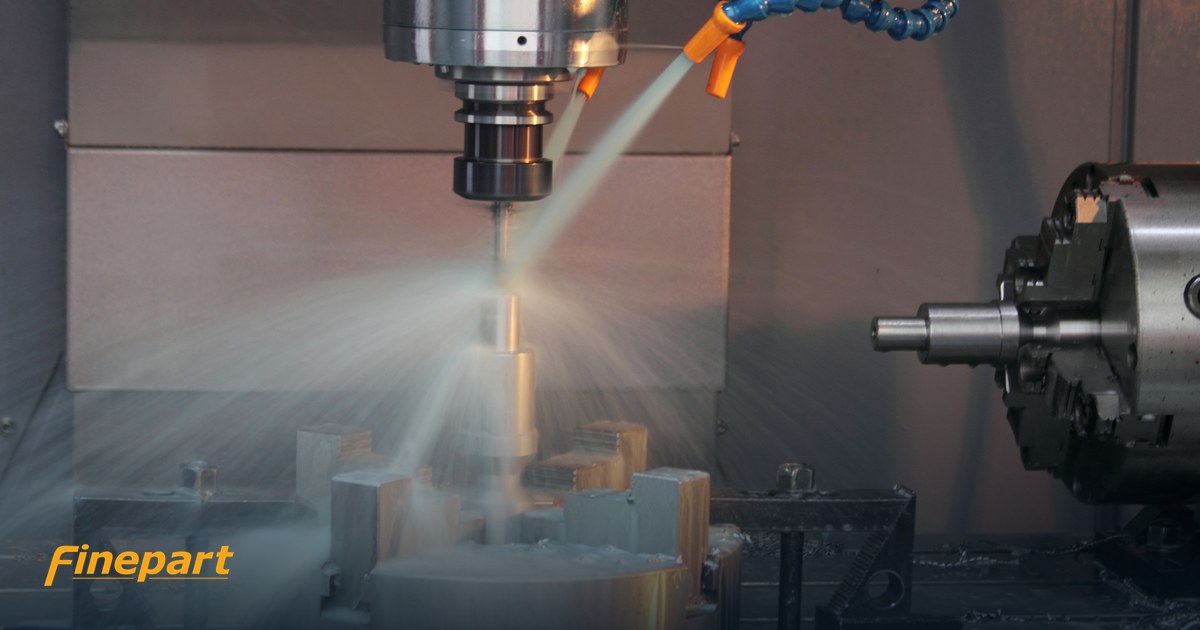
Comparison · Waterjet vs CNC milling
No tool wear, no clamping stress: where waterjet outperforms CNC milling
Every milled part fights two enemies the drawing never mentions. The first is tool wear — the cutter degrades as it works, and that degradation costs money and precision. The second is mechanical stress — the forces that hold the part and drive the tool through it. On robust parts in easy materials, neither is a big deal. On hard materials, thin sections and delicate geometries, both can decide whether the part is good.
Enemy one
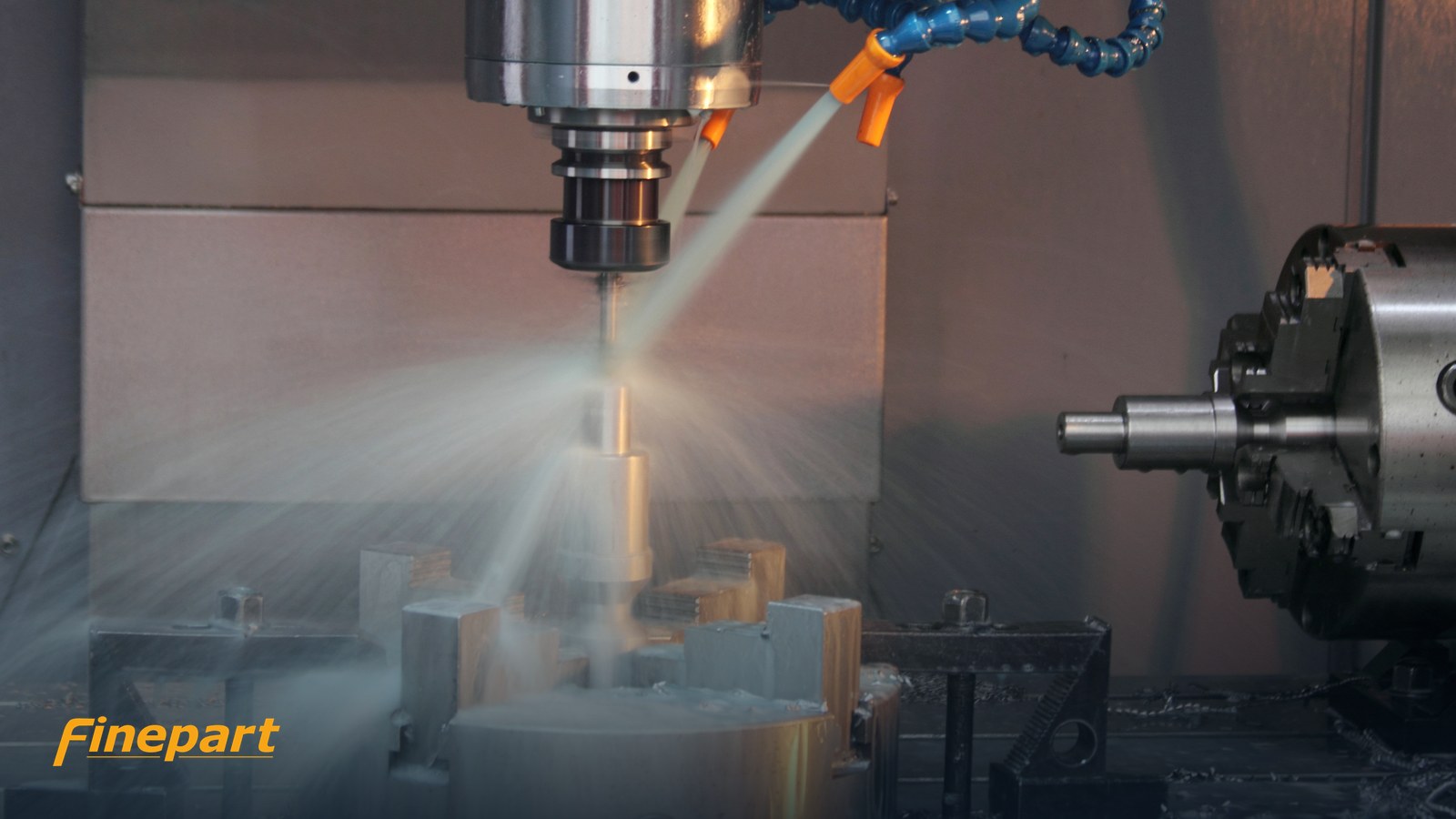
Tool wear
A milling cutter is a consumable that loses its edge as it cuts, and hard or abrasive materials accelerate the process. Wear shows up in three ways that all cost money:
Precision
Drifting tolerances
Tolerances and finish drift as the edge dulls mid-job — the hundredth part isn’t the first part.
Time
Tool changes & downtime
Plus the inventory and management of a tool library.
Money
Expense on hard materials
Ceramics, hardened alloys and abrasive composites can make tooling the dominant cost of the operation.
It consumes abrasive (typically garnet or alumina), which is a predictable running cost rather than a precision-robbing one. The thousandth part is cut the same way as the first, and switching from a soft polymer to a hardened alloy is a parameter change, not a re-tool.
Enemy two
Clamping and cutting stress
To machine a part you must clamp it and push a tool through it, and both apply force. Those forces distort thin, springy or delicate components — walls deflect, features chatter, spring elements lose their set — and they can leave residual stress that surfaces later as warping or reduced fatigue life. For parts whose mechanical behaviour is the whole point, that’s a functional defect, not a cosmetic one.
Because waterjet applies negligible contact force, parts come off the machine unstressed, with their properties intact. That’s exactly what thin sections and spring-property components need — for example nitinol, whose superelastic behaviour must survive manufacturing unchanged.
By design
No contact, no heat
Micro abrasive waterjet cuts by erosion, with no tool touching the part and no heat entering it. So the two failure modes of milling on demanding parts — wear-driven tolerance drift and force-driven distortion — simply don’t apply. The trade-off is honest, though: waterjet consumes abrasive and isn’t the fastest way to hog out a 3D pocket, which is exactly where the mill earns its keep.
Decision
Which should you choose?
Choose CNC milling
True 3D geometry
Unmatched for 3D features, threads, blind pockets and fine surface finishes — fast and economical on routine machinable materials.
Choose waterjet
Hard, thin, stress-sensitive
Hard or brittle materials, thin or stress-sensitive parts, and any job where tool wear or clamping distortion is the real risk.
Choose both
Complementary, not rivals
A common, efficient pattern: profile a difficult-material blank on waterjet, with no stress, then mill the 3D detail.
See the full picture in our waterjet vs CNC machining comparison.
See it on your own part
Is tool wear or distortion costing you parts?
Send us the drawing and material, and we’ll cut it with no contact, no heat and no stress — on your actual production part.
No theoretical projections. Just data on your part.
FAQ
Frequently asked questions
Does micro abrasive waterjet have tool wear?
There’s no cutting tool to wear. It consumes abrasive, which is a predictable operating cost rather than a source of tolerance drift — so the last part matches the first.
Why does CNC milling stress thin parts?
Clamping and cutting forces distort thin, springy or delicate parts and can leave residual stress that warps the part or reduces fatigue life. Waterjet’s no-contact cut avoids it.
Is waterjet cheaper than milling?
It depends on the part. For hard or brittle materials, thin/stress-sensitive parts and low volumes, waterjet’s lack of tooling, finishing and wear often wins on finished cost. For 3D features at volume in machinable metals, milling is usually more economical.
Can I use both waterjet and CNC on the same part?
Often the best answer — waterjet for stress-free profiling of difficult materials, CNC for 3D features and finishes.
